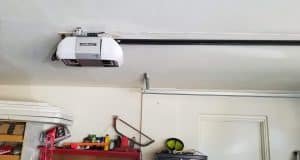
A garage door tune-up sounds small, like changing batteries in a remote. In real life it’s closer to a safety inspection plus a friction audit, with a little bit of adjustment work mixed in. When people say “my door just stopped working” it’s rarely sudden magic, it’s usually weeks or months of extra strain building up in the system. The rollers start fighting the track. The door gets slightly out of balance. The opener pulls harder than it should, and it keep doing that until something gives.
A tune-up is meant to catch that “extra strain” early, before it turns into a stuck door at 7:40 a.m. or a snapped cable at the worst time. And yes, it’s also about safety, because garage doors are heavy moving assemblies, and the standards around openers and entrapment protection exist for a reason.
What counts as a garage door tune-up, technically
A proper tune-up looks at the whole door system, not just the opener. The opener is only a motor and a brain. The door itself is the moving load, and the counterbalance parts are what make that load manageable. If the counterbalance is off, the opener ends up doing work it was not meant to do.
Industry standards for door systems commonly reference cycle life expectations, with 10,000 cycles often used as a baseline minimum in specifications and testing language for door systems and related components. One cycle is one open plus one close. That number matters because wear does not happen by calendar, it happen by cycles.
What’s included in a professional tune-up
Different technicians have different habits, but a solid tune-up usually includes the same “core” checks. Some of these are visual, some are functional tests, and some are small corrections that reduce stress.
01. Safety reversal and entrapment protection tests
This is the part many homeowners assume is fine, until it isn’t. A tune-up should verify that the door reverses when it should, and that the safety sensors work reliably. The federal safety standard and UL-related testing language focus heavily on entrapment protection behavior and test criteria, including photoelectric sensor related tests.
What a tech typically does here:
- Checks photoelectric sensors for alignment, secure mounting, and wiring condition.
- Confirms the door reverses when the sensor beam is interrupted during closing.
- Confirms the opener’s reversal behavior when the door contacts an obstruction.
- Looks for bad habits like sensors mounted too high, or brackets that wiggle loose over time.
This is not just theoretical safety talk. The U.S. consumer safety agency documented child entrapment deaths under automatic garage doors in earlier decades, and that history is a big reason modern safety practices are treated as non optional.
02. Door balance test
Balance is the quiet king of reliability. If the door is balanced, it should stay at mid travel when disconnected from the opener, without slamming down or drifting up fast. If it can’t do that, the opener is forced to compensate every single cycle. That extra load shows up as stripped gears, overheated logic boards, broken sprockets, bent rails, and “mystery failures” that are not mystery at all.
A tune-up should include a manual balance check and a basic evaluation of counterbalance behavior, with strong caution around spring adjustment because springs are high tension components and not a DIY tweak area.
03. Roller, hinge, and bearing inspection
Rollers and hinges do boring work, until one starts binding. A good tech checks:
- Roller condition: wobble, chips, cracked nylon, worn stems, seized bearings.
- Hinge wear: elongation around fastener holes, cracks, rust flaking, bent hinge leaf.
- End bearing plates and center bearing: noise, grinding feel, visible wear.
- Track brackets and fasteners: looseness, shifting, metal fatigue around mounting points.
DASMA-oriented consumer and inspector checklists emphasize visual inspection of hinges, brackets, fasteners, springs, and related hardware because these are common failure points that show up before a true breakdown.
04. Track condition and alignment checks
Tracks should be secure, reasonably plumb, and not twisted. Small misalignment makes rollers scrub instead of roll, and that creates noise plus wear. A tune-up usually includes:
- Checking that track bolts are tight and brackets are secure.
- Looking for dents, ripples, or a track lip that’s been chewed by a roller.
- Confirming the door sections travel smoothly through the radius.
A good technician does not “muscle” a bent track into place and call it fixed. Track corrections should be controlled, and if the track is damaged, replacement may be the right answer.
05. Cables, drums, and bottom bracket inspection
If there’s one area where “it looks mostly fine” is not good enough, it’s cables and attachment points. Cables are load bearing. When they fray, they can fail suddenly, and the door can go crooked in a blink.
A tune-up should include:
- Inspecting lift cables for frays, rust, kinks, and strand separation.
- Checking cable seating on drums, and looking for uneven wrap patterns.
- Inspecting bottom brackets and fasteners for corrosion or deformation.
Standards and component guidance around cycle testing and endurance are built around the idea that these parts must survive repeated cycling, but real life adds moisture, debris, and poor alignment that testing can’t fully mimic.
06. Spring system condition review (without adjusting it casually)
A tune-up will often include spring condition review, but not always adjustment unless needed and safe. The tech looks for:
- Rust, pitting, or gaps that suggest cracking risk.
- Uneven coil spacing or a “stretched” look.
- Signs of prior improper winding or hardware slippage.
Spring cycle life is influenced by usage, handling, installation quality, and environment. DASMA has published guidance discussing factors that affect spring cycle life, and it’s basically a reminder that springs do not fail only because they got old, they fail because stress and conditions add up.
07. Opener and rail system checks (the part most people assume is the whole job)
Openers also need checks, but they are not the only story. Typical tune-up items:
- Rail mounting and header bracket integrity.
- Chain tension or belt condition, depending on model.
- Travel limits and close force behavior, tested safely.
- Safety feature testing as required by the opener’s guidance and safety expectations.
If the door is heavy or unbalanced, many “opener problems” vanish after balance and friction issues are corrected. That’s why a tune-up that only fiddles with force settings can be a bad idea.
08. Lubrication of correct points (and not lubricating the wrong points)
Lubrication is simple, but easy to do wrong. The goal is reducing metal to metal friction at moving joints, not making the track oily. A tune-up typically includes lubrication of:
- Hinges at pivot points.
- Roller bearings if applicable.
- Bearing plates.
- Spring surface in some cases, depending on spring type and environment.
Tracks are usually cleaned, not lubricated, because oil on track can attract grit and create roller slip.
09. Weather seal and door section condition (small leaks, big annoyances)
This part won’t “prevent a breakdown” as directly as cables and rollers, but it prevents slow damage and daily irritation. A tune-up often checks:
- Bottom seal cracking or gaps.
- Perimeter seal compression and tearing.
- Section joints and panel damage, including loose end stiles on some doors.
For certain door materials like wood, inspection and maintenance intervals may be suggested in the 12 to 18 month range depending on exposure and finish condition.
What’s usually NOT included (and why that’s ok)
A tune-up is not a rebuild. It typically does not include full part replacement unless you approve it, and it usually does not include major track replacement, panel replacement, spring replacement, or opener replacement as part of a basic service.
But a good tune-up should clearly tell you what is worn, what is borderline, and what is unsafe now. If a technician can’t explain that in normal words, that’s a problem.
Why tune-ups prevent breakdowns
Breakdowns come from a few repeating patterns. A tune-up targets those patterns directly.
01. Friction builds load, load breaks parts
A door that rolls freely needs less force. Less force means less stress on:
- Opener drive components
- Door hinges and roller stems
- Track brackets and mounting points
- Cables and drums
It’s not dramatic, it’s just physics and repetition, cycle after cycle.
02. Misalignment causes uneven wear
When a track is slightly off, or a cable wraps unevenly, one side of the system works harder. That creates uneven tension. Uneven tension is what turns “normal wear” into “why did it snap today”.
03. Safety features drift out of spec over time
Sensors get bumped. Brackets loosen. Sun glare can affect sensor performance in certain conditions, which is exactly why standards and safety guidance talk about test criteria and proper setup. Regular testing is a way of catching drift, not assuming it stays perfect forever.
04. Small hardware looseness becomes structural stress
Garage doors vibrate. They flex. They get slammed sometimes, even if nobody admits it. Loose fasteners allow micro movement, and micro movement turns into elongated holes and cracked hinges. Tightening and inspection is a boring fix that prevents expensive weirdness later.
How often should you schedule tune-ups
There’s no single magic interval, but there are sensible layers.
Monthly: quick visual scan by homeowner
The International Door Association suggests a monthly visual inspection approach, looking at springs, cables, rollers, pulleys, and mounting hardware, and getting a trained technician involved when something looks or sounds off.
This monthly scan is not a repair session. It’s just noticing: frays, rust, loose brackets, new noises, jerky travel.
Periodic professional inspection
If your door cycles a lot (multiple drivers, kids, deliveries) the system racks up cycles fast. Since many door system specifications anchor around baseline cycle expectations like 10,000 cycles, heavy use just means you reach wear milestones sooner.
For many households, a professional tune-up on a regular schedule makes sense, especially before extreme seasons (heat, cold, storms) when materials expand, contract, and seals stiffen.
Red flags that mean “don’t wait for the next tune-up”
If you notice any of these, it’s not a “sometime” item, it’s a “soon” item.
- Door suddenly gets louder, with grinding or popping sounds
- Door shakes or wobbles in the tracks
- One side looks like it’s lagging or lifting unevenly
- Cables show fray or rust “fuzz”
- Door reverses randomly, or refuses to close unless you hold the wall button
- Door feels heavy when disconnected from opener (balance issue)
Also, if a spring looks broken or separated, do not run the door. Basic safety guidance is blunt about springs being high tension and needing qualified service.
The bottom line
A garage door tune-up is a structured way to reduce friction, confirm safety behaviors, and spot high risk wear before it becomes a breakdown. It’s not just about noise, though quieter doors are nice. It’s about keeping the counterbalance, cables, rollers, tracks, and opener working together instead of fighting each other.
If you take only one idea from this: a door that is balanced and rolls smooth is a door that stops breaking stuff. And that’s the whole point, really.