Garage door safety sensors are small parts, but they quietly do big work every single day. These sensors sit near the bottom of the door track, usually about six inches off the floor, and their only job is to stop the door if something crosses the path. A foot, a pet, a bike tire, sometimes just a stray leaf.
In 1993, federal safety standards required all garage door openers manufactured for the U.S. market to include a second safety reversing feature such as photoelectric eyes, per the Door and Access Systems Manufacturers Association (DASMA). This rule came after injury data showed thousands of garage door related accidents each year, many involving children. Since sensors became standard, injury rates from door entrapment dropped sharply, though misaligned sensors still cause a large share of service calls today.
When these sensors fall out of line, the door may refuse to close, reverse suddenly, or blink lights like it is annoyed. Most of the time, the issue is simple, but people panic and assume the opener is broken.
How Garage Door Safety Sensors Actually Work
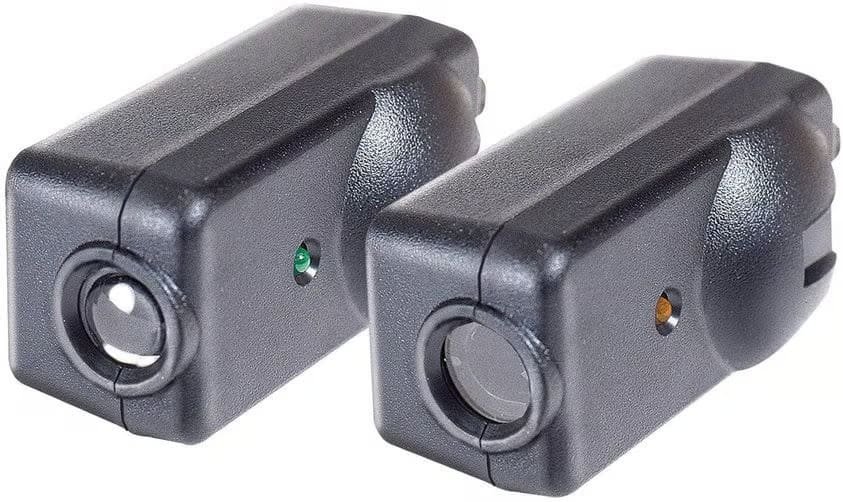
Each garage door uses two sensors that face each other across the opening. One sends an invisible beam, the other receives it. When the beam stays clear, the door closes normally. If anything breaks that beam, the opener stops or reverses the door.
The sending sensor usually has an amber or yellow light. The receiving sensor usually shows green. If both lights are solid, alignment is correct most times. If one light blinks or goes out, the beam is not reaching its target.
Industry service data suggests that sensor misalignment accounts for roughly 25 to 30 percent of residential garage door service visits. That is a lot of trips just for something that can often be fixed in minutes.
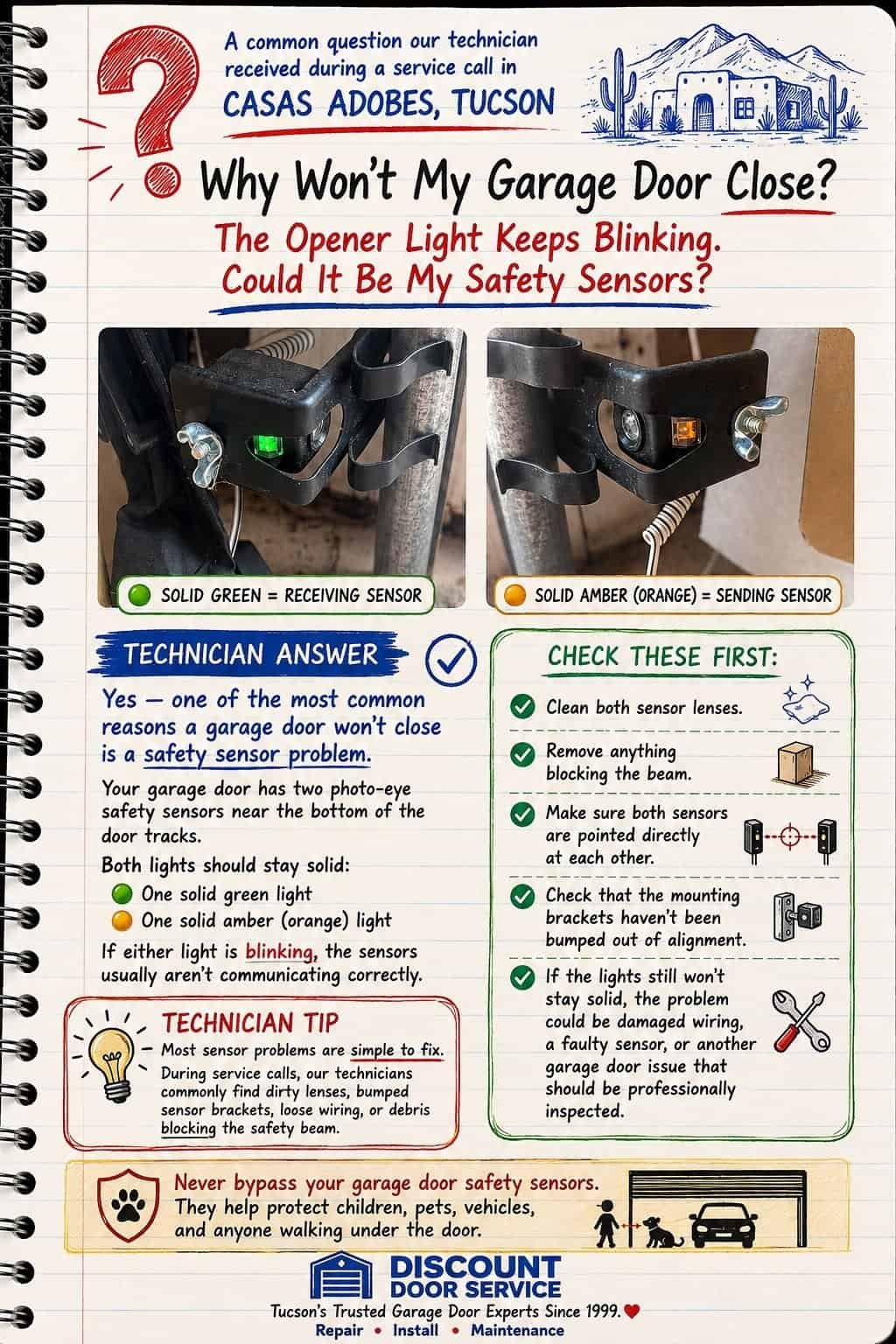
Common Signs Your Sensors Are Out of Alignment
Before touching anything, it helps to notice what the door is doing. The symptoms tell a story.
- The door starts to close, then reverses for no clear reason.
- The opener lights flash repeatedly after a failed close attempt.
- One sensor light is off or flickering instead of steady.
- The door closes only when you hold the wall button down.
That last one is important. Many openers allow override mode when the wall button is held, but this bypasses safety protection. Using it regularly is risky, even if it feels like a workaround.
Tools You Actually Need Before You Start
This job does not require fancy equipment. Overcomplicating it leads to mistakes.
- A soft cloth or paper towel for cleaning lenses.
- A small level, optional but helpful.
- A screwdriver if brackets need tightening.
- Patience, which sounds silly but matters here.
Avoid power tools. Hand tightening gives better control and reduces the chance of twisting the bracket too far.
Step by Step Guide to Adjust Garage Door Safety Sensors
Start by turning off the garage door opener power. Unplug it or flip the breaker. This avoids surprise movement while you work.
Clean both sensor lenses gently. Dust, spider webs, and lawn clippings can weaken the beam. This alone fixes more issues than people expect.
Check the sensor heights. Both should be mounted at the same distance from the floor. Even a half inch difference can break alignment over time.
Loosen the wing nut or screw holding one sensor bracket. Do not remove it fully. Just enough so the sensor can move.
Slowly adjust the sensor left or right until the indicator light turns solid. This part may take a few seconds of tiny movements. Big adjustments usually overshoot.
Tighten the bracket carefully without shifting the sensor again. This step trips people up often. Tighten a bit, check the light, tighten again.
Restore power and test the door. Place an object like a cardboard box in the doorway to confirm the door reverses properly.
A properly aligned sensor should detect an object crossing the beam in less than one tenth of a second. That speed saves fingers.
Dealing With Sunlight and Environmental Issues
Direct sunlight can interfere with garage door sensors, especially in west facing garages during late afternoon. The beam gets washed out and the receiver struggles.
If this happens, slightly angling the sensor inward can help, but only by a very small amount. Some homeowners add a short cardboard shield or sensor hood. It looks rough but works surprisingly well.
Vibration is another problem. Garage doors shake. Over months, that movement loosens brackets. If your sensors go out of alignment often, consider replacing plastic brackets with metal ones.
Wiring Problems That Look Like Alignment Issues
Sometimes alignment is blamed, but wiring is the real issue. A sensor light that stays off no matter what may point to a damaged wire.
Look for staples pinching the wire along the wall. This is common in older installs. Also check near the bottom of the track where water and tools tend to hit.
Industry repair logs show wiring faults make up about 10 percent of sensor related failures. Not huge, but not rare either.
Safety Mistakes to Avoid While Adjusting Sensors
Never tape the sensors together or bypass them permanently. This removes a critical safety layer.
Do not raise sensors higher than recommended height. They are designed to detect low obstacles, not waist level ones.
Avoid forcing brackets back into shape with pliers. Bent brackets often fail again quickly. Replacing them is safer long term.
Do not test sensors using hands or feet. Use an object instead. That habit prevents accidents when things move unexpectedly.
When Sensor Adjustment Is Not Enough
If sensors are aligned, clean, wired correctly, and still misbehave, the opener logic board may be at fault. This is less common but does happen with age or power surges.
Professional data from garage door service networks indicates that openers older than 10 to 15 years show higher rates of sensor communication failure. At that point, repair versus replacement becomes a real discussion.
Conclusion
Garage door safety sensors are not mysterious, just sensitive. A small bump from a broom or trash can is enough to throw them off. Understanding how they work makes the fix feel less stressful.
Taking ten careful minutes beats living with a door that refuses to close. And more importantly, proper alignment keeps people safe, which is the whole point of these little blinking lights in the first place.