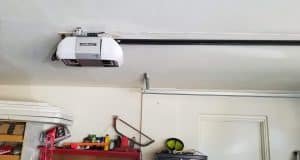
A garage door opener motor rarely fails like a light bulb, on then off, done. It more often goes weak, noisy, hot, inconsistent, and kind of annoying before it fully quits. And to make it harder, a “motor issue” can actually be a start capacitor, a worn drive gear, a slipping belt, a tight door, or a force setting that got nudged up over time. The symptoms overlap, so you want to read the pattern, not just one weird moment.
This article is focused on motor failure signs, but it also calls out the common look alike problems, because mislabeling the issue wastes money fast.
What counts as a failing motor, in real terms
When people say “the motor is failing,” they usually mean one of these:
- The motor windings or bearings are wearing out, so it runs hot, loud, and weak.
- The motor start system is failing, often the capacitor on many units, so it hums but won’t start turning.
- The motor is fine but the load is too high, usually because the door is no longer balanced, rollers are binding, or the track has drag.
- The motor runs but the drive parts slip, like a stripped gear or a loose coupling, so you hear motion but the door barely moves.
If your opener is older, you can have two problems at once, which is why the symptoms can look messy.
Lifespan reality check so you don’t second guess normal aging
Most residential openers land in a broad 10 to 15 year range in typical home use, assuming normal maintenance and not an unusually heavy door. Some go longer, but if you are past that window, the motor doesn’t need a dramatic failure to justify replacement. It can just be tired, plain and simple.
Also worth knowing, many residential torsion springs are commonly rated around 10,000 cycles, and when springs age or lose lift, the opener motor quietly becomes the “muscle” that compensates. That extra strain adds up.
Sign 1: The opener runs, then quits, then works again later
This is one of the most telling patterns. You press the remote, it starts, then stops mid travel, and later it works like nothing happened.
Many openers use thermal overload protection, basically a heat shutoff that trips when the motor gets too hot, then resets after cooling. When this starts happening more often, the motor may be overheating from internal wear or from being overworked. A motor near the end tends to heat faster, and cool slower too, which is frustrating.
What makes this sign stronger: it happens more on hot days, or after a few open close cycles close together.
Sign 2: Humming or buzzing, but the door does not move
A classic symptom, and it scares people because it sounds like power is there but nothing happens. That’s basically accurate.
A common cause is a failing capacitor, and many manufacturers call out capacitor inspection when you get a hum with no movement. If the capacitor tests bad, you may be able to repair without replacing the whole opener.
If the capacitor is fine, the hum can also mean the motor is struggling to start because it’s mechanically bound up, or the motor itself is damaged. Either way, repeated humming attempts is rough on the motor, so don’t keep “trying it again” twenty times.
Sign 3: The door moves slower than it used to, especially under load
A healthy opener should be pretty consistent in speed. When the motor begins to weaken, you may notice:
- slow start, then it catches up
- slow through the first half, then it speeds up
- slow only on closing, or only on opening
- random sluggish days with no obvious reason
Slowness can also come from a door that’s getting heavy, so do the balance test later in this article.
But if the door is balanced and the opener still drags, that points back to motor wear, gearing wear, or control board issues.
Sign 4: The opener housing feels hot, or you smell a burnt odor
A motor that runs hot is not automatically “dead,” but it’s a warning. Heat is what breaks down insulation on windings and cooks internal components over time.
If you notice a hot housing or a burning smell, it may be overheating and tripping protection, or it may be running at the edge of its capacity every cycle. That’s how motors go from “mostly okay” to “done” in a short window.
If there is smoke, or the smell is sharp and electrical, stop using it and get it checked. A garage is not where you want an electrical surprise.
Sign 5: You hear grinding, squealing, or a strained groan that wasn’t there before
Noise changes matter more than “it’s always been noisy.” A failing motor or failing drive train often shifts sound first, then performance later.
Listen for:
- grinding that sounds like gears skipping
- squealing that can hint at bearing wear
- a deep strained groan, like it’s lifting a heavier door than it should
- a louder than normal startup clunk
Some of these are gear or sprocket problems, not the motor windings. Still, the motor pays the price if you ignore it.
Sign 6: The opener starts, then reverses for no good reason
Random reversing is not always sensors, even though sensors are the usual suspect. If the opener “thinks” it hit resistance, it may reverse.
Two motor related reasons this can happen:
- the motor is weak and stalls slightly, and the unit interprets it as obstruction
- the motor is overheating and losing torque mid travel, same result
Safety matters here. Modern residential operators sold under U.S. rules must have an inherent reversing system that can reverse the door within 2 seconds, aimed at reducing entrapment risk. If your opener is inconsistent, treat it as a safety issue, not just a convenience issue.
Sign 7: You find yourself increasing the force settings to “make it work”
This is the one that makes technicians nervous. If you keep raising force so the door closes, you can mask the real issue while increasing risk.
Manufacturers warn that too much force can interfere with the safety reversal system, and force should not be increased beyond what’s needed for proper operation. If your opener suddenly needs more force than before, the likely causes are:
- door is getting heavier or binding
- springs are weakening
- rollers or hinges are worn
- motor or drive parts are losing torque
Raising force is not a fix, it’s a clue, and sometimes a dangerous one.
Sign 8: The motor runs but the chain or belt barely moves
Sometimes you hear the motor spinning, but the door does little or nothing.
That often points to a stripped gear, loose sprocket assembly, or worn coupling, depending on model.
This is not “the motor is weak,” it’s “the motor output isn’t getting to the door.”
Still, it can be related to overload, because overloaded systems chew through gears faster.
Sign 9: The opener is suddenly very sensitive to temperature or humidity
If it works fine at night but struggles mid day, or works in winter but struggles in summer, pay attention.
Heat increases electrical resistance and stress, and it can push a marginal motor into thermal shutdown faster.
This sign becomes stronger if you also notice warm housing, burning smell, or the stop then resume pattern.
Quick tests that separate “motor failing” from “door problem”
Do these before buying parts, it saves money, and embarrassment.
1) Door balance test (the most important one)
Pull the emergency release so the door is disconnected from the opener. Lift the door by hand to about waist height, then let go carefully.
- If it stays near place, springs are doing their job, mostly.
- If it falls, the door is heavy, and the opener motor has been overworking.
- If it shoots up, the spring tension may be off, also a problem.
A heavy door can make a good motor look bad.
2) Listen with the door disconnected
With the door disconnected, run the opener briefly. A motor that still sounds strained with no door load is more likely a motor or gear issue, not door binding.
3) Check the basic reversal test
Monthly testing is not just a suggestion in many safety instructions.
U.S. federal rule language for instruction manuals includes testing monthly and requiring reversal on contact with a 1 1/2 inch object or a 2 by 4 laid flat.
Many manufacturers also describe a 2×4 style reversal test.
If your opener fails this test, stop treating the issue as “it’s annoying,” it’s a safety fault.
Why this matters beyond convenience, a safety note with real numbers
Garage door opener safety rules tightened for a reason. The U.S. safety agency has long tracked child entrapment incidents and reported dozens of deaths in earlier decades tied to automatic openers without adequate protection. Modern standards and photo eyes reduced risk, but only if the opener is adjusted correctly and reversing systems actually work.
A struggling motor that leads to force adjustments or inconsistent reversal is not a small thing.
Repair vs replace, how to make the call without guessing
A practical way to decide is to group the issue:
Replace a part when the opener is otherwise healthy
Examples:
- humming but no start, and capacitor is bad
- worn sprocket or gear kit, motor still strong
- loose chain or worn belt, motor runs fine
These can be cost effective, especially if the opener is not too old, and parts are still available.
Replace the whole opener when age and risk stack up
Consider full replacement when:
- the opener is in that 10 to 15 year range or beyond, and symptoms are multiplying
- you are seeing thermal shutdown cycles, burning smell, and slow movement together
- safety reversal is inconsistent, and force settings are creeping upward
- parts are discontinued, or repair cost is close to replacement
Newer units can also offer better diagnostics, quieter operation, and improved safety compliance, which is not nothing for a heavy moving door.
Small habits that extend motor life, boring but effective
You don’t need a fancy routine, just avoid the big motor killers.
- Keep rollers and hinges properly maintained so the door doesn’t drag.
- If the door gets noisy, don’t ignore it for months, noise is friction, friction is load.
- Don’t run rapid fire cycles unless you need to, motors heat up with repeated duty cycles.
- Test reversal and photo eyes regularly, because a misadjusted system tempts force changes later.
- If the door feels heavier by hand, address springs and balance early, it protects everything downstream.
A short checklist you can use today
If you want a quick, no drama way to judge the situation, use this:
- Does it stop mid travel and later work again
- Does it hum but not move
- Does it feel hot or smell electrical
- Is it slower than last month, not last year
- Did you adjust force to keep it closing
- With the door disconnected, does the opener still sound strained
- Does it pass the reversal test with a 2×4 type object
If you answered “yes” to two or more, treat it as a real failure trend, not a one off glitch.
Conclusion
A garage door opener motor usually dies from work it was never meant to do. A door that is out of balance, binding, or heavy makes the motor act old fast, like years of wear in a season.
So yes, motors fail. But many motors get pushed into failing, and the warning signs are your chance to stop that slide before you end up with a stuck door at the worst time.