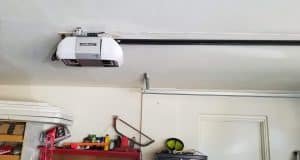
Belt drive garage door openers use a reinforced rubber or polyurethane belt to move the trolley. Instead of a metal chain, the belt slides smoothly along the rail and pulls the door up and down. This small change in mechanism alters noise levels, vibration, upkeep, and long term wear quite a bit. Homeowners often notice the difference right away, especially in attached garages near bedrooms.
Noise Levels and Everyday Sound Impact
Noise is the main reason people look at belt drive openers in the first place. Industry testing has consistently shown belt drive systems generate noticeably lower operating noise than chain drive units.
Sound measurements taken in residential garage settings often show belt drives producing roughly 40 to 50 percent less vibration noise during opening cycles. This matters more in modern homes where garages share walls with living areas or sit under bedrooms.
The reduced noise comes from fewer metal to metal contact points. Belts absorb motion instead of amplifying it, so rattling is limited even as the opener ages. For families with light sleepers or people working night shifts, this quiet operation can feel like a major upgrade.
Cost Comparison and Budget Considerations
Belt drive garage door openers usually cost more upfront than chain drive models. Retail pricing data across North America shows belt drive units commonly priced 20 to 40 percent higher than comparable chain systems.
That price gap is tied to belt materials, added vibration dampening, and often bundled smart features.
Installation labor costs are generally similar across opener types. However replacement belts can be more expensive than standard chains if repairs are needed later. For budget focused households, this higher initial cost sometimes becomes the deciding factor.
Longevity and Expected Lifespan
Longevity is often debated and not always explained clearly. Manufacturers typically rate belt drive garage door openers for around 10,000 to 20,000 open close cycles depending on model. This aligns closely with chain drive ratings, though belt systems tend to maintain smoother performance as cycles add up.
Belts do not rust, which helps in humid or coastal regions. Over time though belts can stretch or crack, especially in extreme heat or cold conditions. Longevity ends up depending more on climate and maintenance habits than the belt itself.
Maintenance Requirements Over Time
Belt drive openers need less routine maintenance compared to chain systems. No lubrication is required for the belt, which reduces mess and yearly service tasks. Homeowners often report fewer adjustment calls during the first five to seven years of ownership.
Still maintenance is not zero. Sensors, rails, rollers, and springs still wear out at similar rates regardless of opener type. Ignoring these parts can shorten the life of even the best belt drive system.
Performance Under Heavy Door Loads
One drawback sometimes overlooked is performance with heavy garage doors. Belt drive openers handle most residential steel and aluminum doors without issue. But very heavy solid wood or oversized custom doors can strain the belt faster than a chain.
Manufacturers often recommend higher horsepower belt units for these setups. Skipping that step may lead to early belt wear or slower door response.
Vibration Control and Structural Stress
Reduced vibration is not only about sound. Lower vibration means less stress on mounting brackets and ceiling supports. Home inspection studies have shown excessive opener vibration can loosen fasteners over long periods.
Belt drive systems apply smoother force curves, which helps protect framing and hardware. This can quietly extend the life of the entire garage door assembly.
Smart Features and Modern Compatibility
Many belt drive openers are positioned as premium products. As a result they often include Wi Fi control, battery backup, and smartphone alerts as standard features. Market surveys from home automation groups show belt drive models dominate smart opener sales in newer homes.
This is not guaranteed though. Some chain drive models now offer similar features at lower cost, narrowing the gap.
Energy Efficiency and Power Use
Power consumption differences between opener types are small but measurable. Independent energy audits have found belt drive openers draw slightly less power during operation due to smoother motion. The difference is modest and rarely impacts electric bills in a noticeable way.
Standby power use depends more on electronics than the drive mechanism. Smart features can increase idle power draw regardless of belt or chain design.
When a Belt Drive Opener Makes Sense
Belt drive garage door openers suit homes where quiet operation matters most. They also work well in attached garages with finished ceilings and living space nearby. Homeowners planning long term occupancy often appreciate the smoother feel and lower vibration.
For detached garages or rental properties, the added cost may not bring clear value. In those cases simpler systems can still perform reliably for years.
Balanced Takeaway on Pros and Cons
Pros include low noise, reduced vibration, less routine upkeep, and smoother motion over time. Cons include higher upfront cost, possible belt replacement expense, and limits with very heavy doors. Longevity ends up comparable to other opener types when properly matched to the door.
Choosing a belt drive garage door opener is less about trends and more about daily living comfort. When noise and smooth operation matter, the tradeoffs often feel worth it even years later.