A chain drive garage door opener is not the “cheap old loud one” by default. It is a mechanical choice, and sometimes it is the smarter one, even when you could afford the quieter option. The trick is knowing when the tradeoff is real, and when you are just buying noise for no reason.
Chain drive means a metal chain pulls the trolley along the rail, moving the door. Simple idea, few parts, and it tend to tolerate hard daily use pretty well. It also tend to announce itself, yes, that part is true.
What follows is the shortlist of situations where chain drive actually makes more sense, plus the boring details that save you money later, not just today.
Chain drive basics, in plain terms
All residential openers are doing the same job: they pull a door that is supposed to be counterbalanced by springs, so the opener is mostly guiding and moving, not “dead lifting” the full door weight. But real garages are messy. Springs get a little tired. Tracks get bumped. Weather changes. Doors gain weight from insulation upgrades, or a wood overlay, or thicker panels. That’s where drivetrain choices start to matter, a bit.
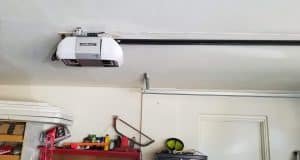
A chain drive setup usually has:
- A motor unit mounted on the ceiling
- A rail
- A trolley that attaches to the door arm
- A metal chain looped over sprockets, pulling that trolley
The upside is straightforward: robust pulling action, easy-to-understand mechanics, and parts that are common. The downside is also straightforward: more vibration and more sound through the rail and mounting points.
Noise is real, but it is not always relevant
If your garage is attached and there’s a bedroom above it, chain drive can feel like a personal attack at 6:30 AM. Many comparisons put chain drive sound roughly in the 70 to 80 dB zone, which lands in the “vacuum cleaner-ish” territory on common decibel charts. Normal conversation often sits around 60 to 70 dB, so that gap is not small in a quiet house.
But noise only matters when:
- The garage shares walls with living space
- You open the door during sleep hours
- The mounting structure transmits vibration easily (thin framing, loose angle iron, old fasteners)
If your garage is detached, or the opener is over a workshop that already has compressors and saws, “quiet” may be a fake requirement. In those setups, chain drive’s extra noise is just background, and you get to focus on other things like durability and cost.
When the door is heavier than “average”, chain starts to earn its spot
Most modern residential steel doors are not insanely heavy, but weight adds up fast with size and insulation. Common references put single-car steel doors around the 85 to 130 lb range, and double-car steel doors often around 150 to 225 lb, with insulated versions tending to sit higher in the range. A typical 16×7 double door is often described around 150 lb for basic steel, and closer to 200 lb when insulated.
Now, to be fair: the springs should be doing most of the lifting. Still, heavier doors often bring:
- more inertia at start and stop
- more strain if balance is not perfect
- more sensitivity to small alignment issues
- more “door flex” that can jerk the opener arm
Chain drive can make more sense here because it handles that tugging action with less belt stretch and fewer “soft” feelings during reversal. It’s not magic strength, it’s just a more direct mechanical link.
Chain drive often makes sense if you have:
- a wide double door that catches wind
- a thicker insulated door
- a door that is older and not perfectly aligned
- a wood or faux-wood door that is simply heavier by nature
Wind is a sneaky factor too, because it changes how a big door behaves while moving. Door industry standards talk a lot about counterbalance expectations and performance under load conditions, and big doors just get more dramatic under real-world pressure.
If you want the lowest upfront cost, chain usually wins
Money talk, without pretending. Installed opener pricing is often quoted in a mid-hundreds range, and chain drive installs are commonly noted as a bit cheaper than belt, sometimes by tens of dollars up to around a hundred depending on the setup and features. Retail pricing comparisons also often show chain units in a lower bracket than belt units.
This matters in these scenarios:
- a rental property where you need a reliable unit, not the quietest
- a detached garage where quiet is wasted money
- a budget remodel where the opener is not the “showpiece” item
- replacing a dead unit fast, without turning it into a whole project
Spending more can still be worth it, but chain is a rational choice when the budget is tight and the environment does not punish the noise.
High-use households, cycle math makes it less about “quiet” and more about “serviceable”
Garage doors live and die by cycles. One cycle is open + close, that’s it. Industry material often frames residential usage as relatively modest, with one door definition describing residential operation as normally expected at less than about 1,500 cycles per year. That’s roughly 4 cycles a day on average, which sounds right for many homes.
Door standards also commonly reference a baseline 10,000 cycle expectation when properly selected and maintained.
If you do the plain math:
- 10,000 cycles ÷ 1,500 cycles/year = about 6.7 years
- If your family uses it 8 cycles/day (about 2,920/year), that same 10,000 cycles is about 3.4 years
- If it’s 12 cycles/day (about 4,380/year), you are closer to 2.3 years
That does not mean the door or opener fails on schedule like a timer, it just shows why high-use garages should care about easy maintenance, accessible parts, and drivetrain tolerance. Chain drive often fits that mindset because tensioning and wear is visible, and components are not mysterious.
Harsh garages, the kind with dust and temperature swings
Some garages are basically outdoor rooms. Dust, pollen, car exhaust residue, salty air in coastal zones, and wide temperature shifts all do their own kind of damage.
Chain drive can make more sense when:
- your garage is unconditioned and sees big seasonal swings
- there’s frequent dust from woodworking, landscaping gear, or a nearby road
- you value mechanical simplicity, even if it needs occasional lubrication
- you’d rather maintain it than “hope it stays quiet forever”
Belts are often low-maintenance and quiet, yes. But chains are straightforward to clean, inspect, and re-lube. If you are the type who actually does light maintenance, chain drive becomes less annoying over time, not more.
Repairability is a quiet advantage nobody markets well
Here’s an unglamorous truth: many homeowners do not replace an opener because the motor died. They replace it because:
- the drive system got sloppy and loud
- the chain or sprocket wore down
- the unit started reversing due to force settings and friction changes
- small parts became a hassle
Chain drive is usually easier to diagnose by sight and sound. Loose chain rattle is obvious. Sprocket wear is visible. Tension adjustment is mechanical, not mysterious. A lot of the “fix” is basic, like tightening, lubricating, or replacing a common part, not a full teardown. That simplicity can matter if you live far from service, or you hate waiting on specialized parts.
Chain drive still has to be safe, and modern safety rules are not optional
Any opener choice should be framed around safety first, because a moving door is heavy and can trap people, pets, or objects. Modern operator safety requirements evolved significantly, and the standards and federal actions around entrapment protection pushed the industry toward photoelectric sensors and related protections, with key changes rolling into the early 1990s era and later revisions.
So, chain drive makes sense only if:
- photo eyes are installed correctly and aligned
- reversal sensitivity is tested
- the door is properly balanced by springs
- the hardware is mounted solidly (no flexing supports)
A chain drive on a badly balanced door is not “strong”, it’s just being forced to mask a door problem until something breaks.
When chain drive is the wrong call, even if it is cheaper
Chain drive is a poor fit when:
- a bedroom is directly above the garage and people sleep light
- you work night shifts and open the door at odd hours
- you have vibration-sensitive framing (it can make the whole ceiling talk)
- you already hate mechanical noise and you know it
Also, if your garage ceiling mounting is weak or sloppy, chain drive will punish you more. The vibration is not only the opener, it’s the building acting like a speaker.
How to choose a chain drive opener the smart way
If you decide chain drive is right, do not buy the first box that says “heavy duty”. Look for practical specs and setup realities.
Match the opener to door size and behavior
- Wide double doors need stable mounting and a straight rail
- Tall doors (8 ft) often need a rail extension kit
- If the door binds at any point, fix the door first, don’t “upgrade” the opener to brute force it
Don’t obsess over horsepower alone
Motor marketing can be confusing because brands label power differently. What matters more in practice is:
- smooth starting and stopping
- reliable force sensing and reversing
- a rail system that stays rigid over time
- consistent travel limits
Pick features that reduce real headaches
- Battery backup if power outages happen in your area
- Smart control if you genuinely need remote monitoring
- A better lighting setup if the garage is your workspace
- Soft start and soft stop if you want less vibration (even with chain, it helps)
Maintenance that keeps chain drive from becoming “that loud garage”
Chain drive maintenance is simple, but it has to be done at least sometimes.
A decent routine looks like:
- Check chain tension every few months, especially after temperature shifts
- Lubricate the chain lightly if the manufacturer allows it, and wipe excess so it doesn’t turn into a dirt magnet
- Inspect mounting points for loosened bolts and angle iron flex
- Listen for change: new clicking, grinding, or sharp rattling is usually a mechanical clue
- Test safety reversal and photo eyes regularly, not once a decade
If your chain is over-tightened, it can wear sprockets faster. If it is too loose, it can slap the rail and sound worse than it has to. Small adjustment, big difference, kind of annoying but true.
A simple decision checklist
Chain drive makes more sense when most of these are true:
- The garage is detached, or noise is not a big deal
- The door is heavier, wider, or a bit temperamental
- You want lower upfront cost without gambling on weird parts
- You do not mind light maintenance now and then
- You want something mechanically obvious and serviceable
Belt or other options make more sense when most of these are true:
- The garage is under living space and quiet really matters
- You open the door early or late often
- You never want to think about lubrication
- Vibration through the house bothers you fast
Conclusion
A chain drive opener is not the “best” choice, it is the correct choice in the right garage. If your setup is loud already, if the door is big, if the garage is a work zone, if cost matters, chain drive is not a compromise, it’s a practical call. If your garage sits under a nursery, then chain drive is basically choosing conflict on purpose, and you will regret it.
If you want, tell me your door size (like 16×7 or 8×7), whether it’s insulated, and if the garage is attached. I can map the decision cleanly without turning it into brand hype.